We’ve Got Game...
Game theory rings true in everything we do. We’re big on competition, strategy, and managing risk – just like great gamers are. Find out how we use our favorite games to hone our skills and apply them to complex financial markets.


The game of poker is valuable in more ways than you may think. We use poker to teach new traders about decision making under uncertainty. Our traders go through similar thought processes while evaluating the expected value of a given trade and deciding how to price risk.

We’ve found that the best strategy does not necessarily depend on what has already happened in the game, but how past actions of your opponents can provide insight into the way they think.
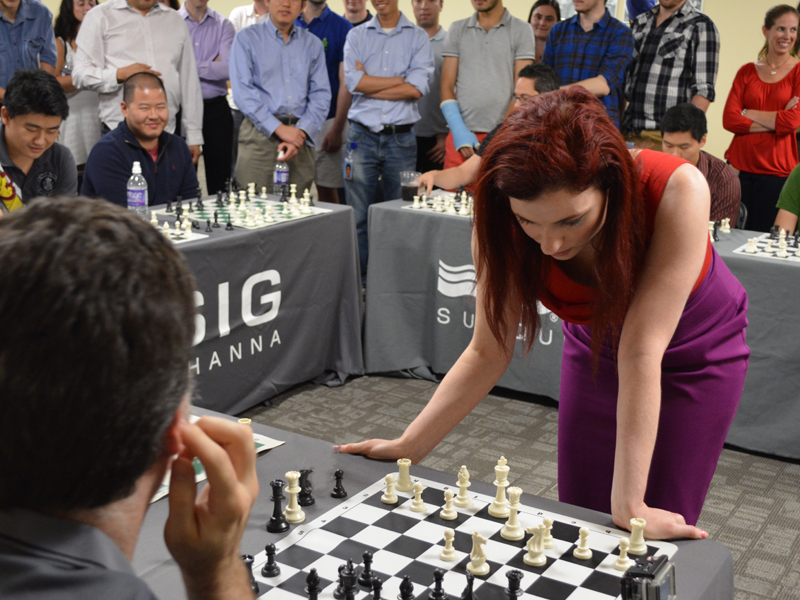
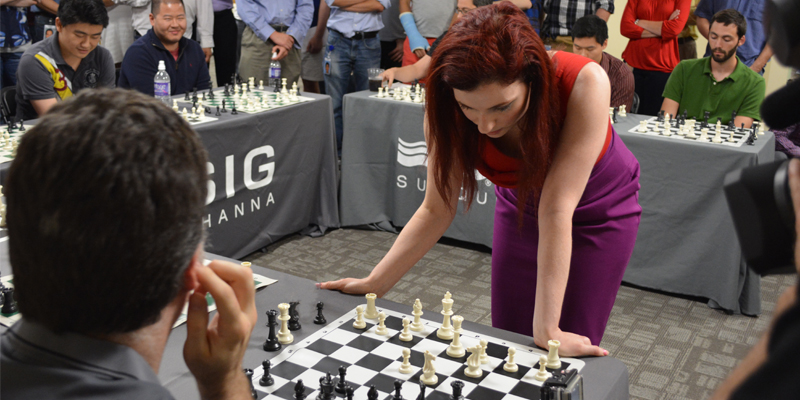
We challenged Jennifer Shahade, Two-time American Women’s Chess Champion, to a simul chess game. See the match results

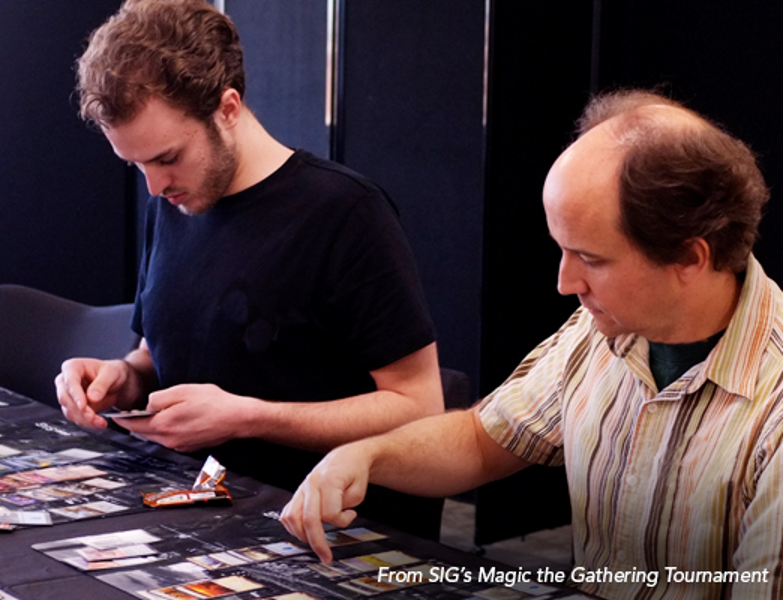
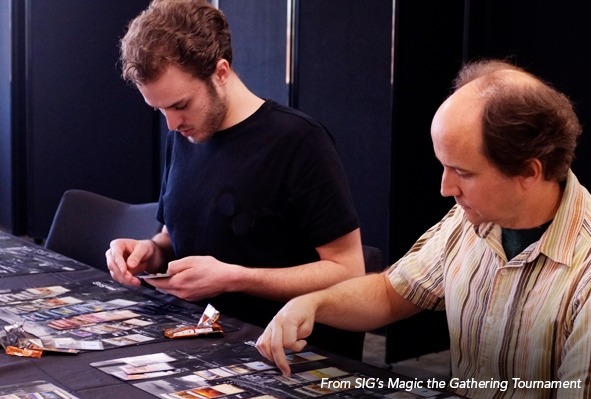
Magic requires the same set of skills our traders use: decision making with imperfect information, observation of your opponents, and strategizing to maximize your potential to win. It’s kind of a big deal here, and so are some of our players.

We like board games that require strategic thinking, pattern identification, and quick response time. We like the challenge of Backgammon, The Settlers of Catan, SET, The Resistance, Hanabi, Power Grid, and Dominion – just to name a few.

Strategy is a huge part of certain video games. We like action games that require reactions to small changes in a fast paced environment.

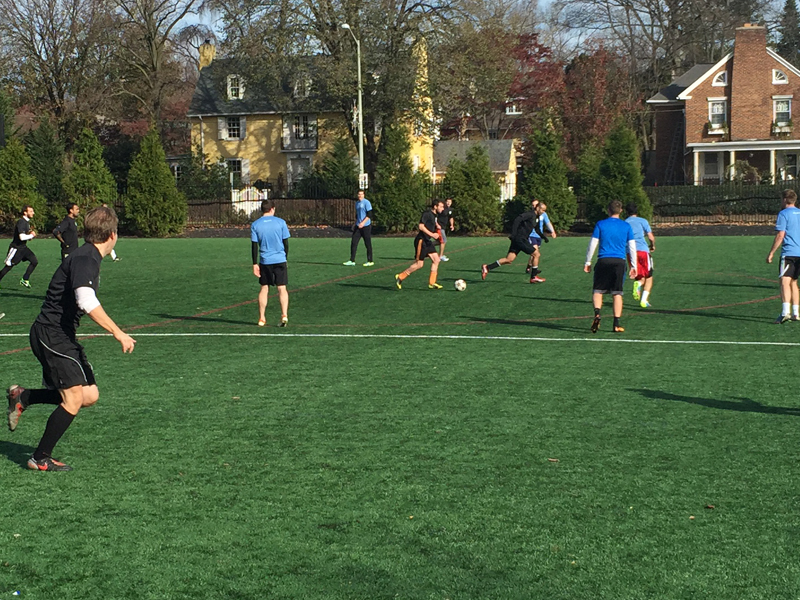
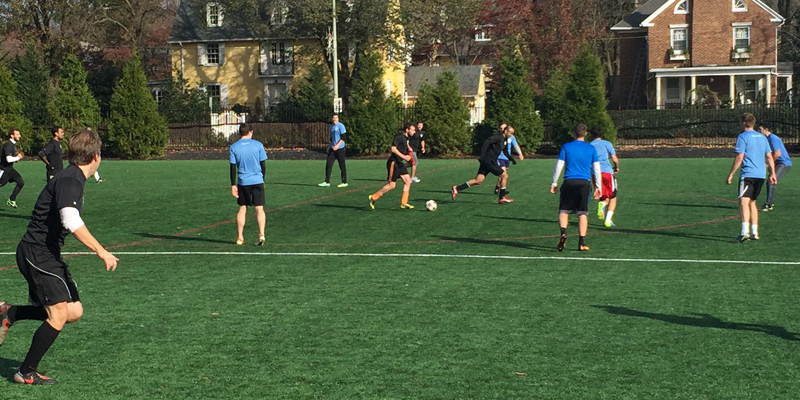
There are many lessons that carry over from team sports to SIG. We work collaboratively, each playing his or her part in information gathering, assessing alternatives, execution, and risk management.




Site Map | Disclosures | Privacy Statement
Copyright © 2024 SIG Susquehanna. All rights reserved. Susquehanna Financial Group, LLLP (SFG), an affiliate of SIG, is a member of FINRA.
Site Map | Disclosures | Privacy Statement | Information & Waiver
Copyright © 2024 SIG Susquehanna. All rights reserved.
RA : 